Gangwon Paleozoic
South Korea, Gangwon
About Gangwon Paleozoic
Gangwon Paleozoic National Geopark covers the Yeongwol, Jeongseon and Taebaek area of southern Gangwon, where Paleozoic strata, karst and river landforms are exposed. Its geosites fall into rocks and fossils, karst and rivers and wetlands[1].
Wildlife Ecosystems
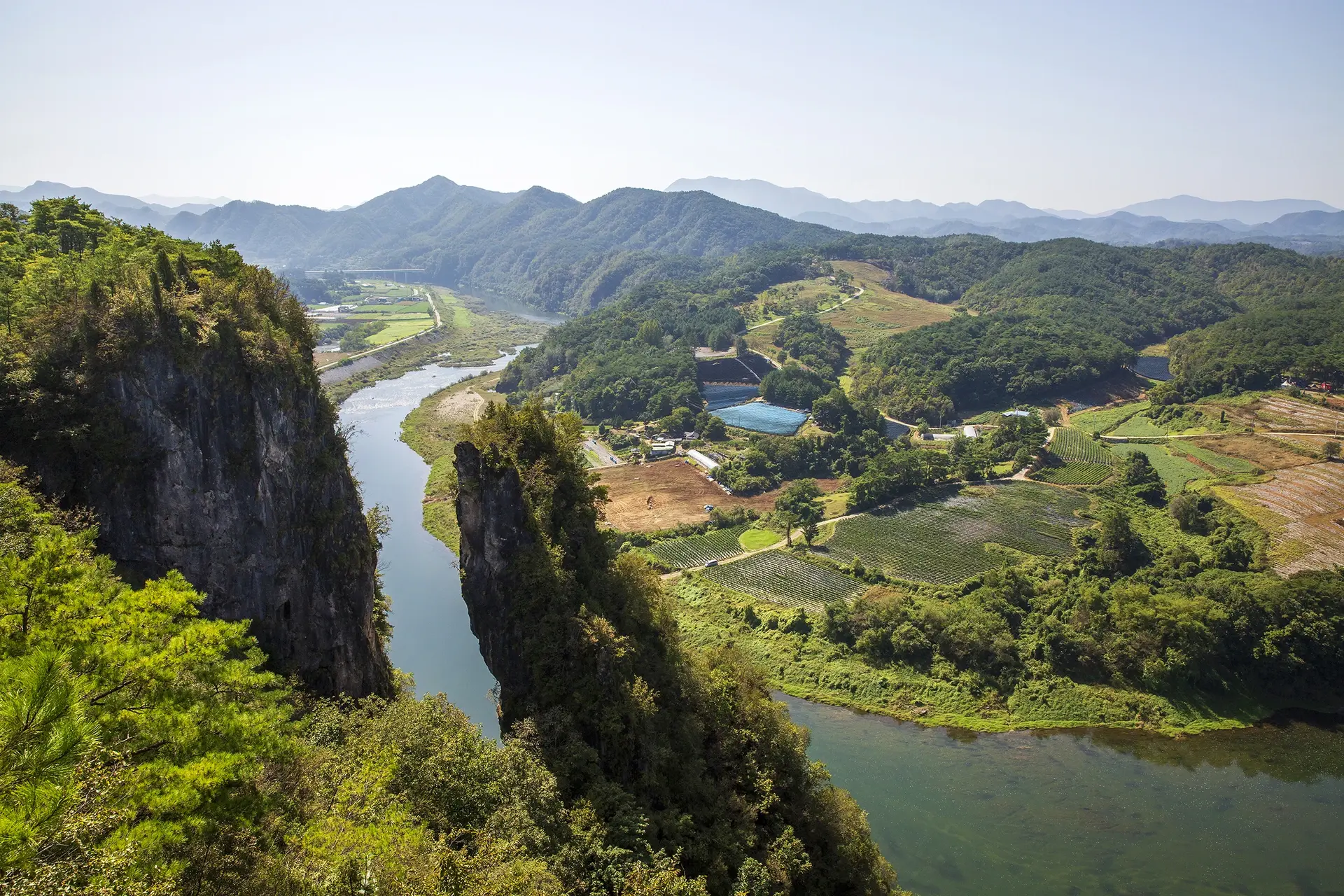
The Dong River gorge in Jeongseon is a natural ecotourism area in southern Gangwon, designated an ecological landscape conservation area in 2002[2].
Flora Ecosystems
Geology
The Yeongwol area was sea about 500 million years ago before becoming land. The Munggok-ri stromatolites, formed by microbial mats, are thought to be about 450 million years old[1]. Along the Dong River, repeated erosion and deposition produced cliffs, sandbars and terraces, and limestone areas hold caves and other karst landforms[2].
Climate and Weather
Southern Gangwon has a mountain climate with cold winters and warm, rainy summers.
Human History
The Sangdong tungsten mine became one of the world's largest tungsten deposits; its existence was learned in 1916, it made up over 60% of Korea's foreign-currency earnings in the 1960s and it closed in 1994. The Machari coal mine closed in 1990[1].
Park History
The Dong River was added as a geosite of the Gangwon Paleozoic National Geopark in 2017[2].
Major Trails and Attractions
Visitor Facilities and Travel
Yeongwol has the Yeongwol Geo Museum, opened on the site of a closed school branch, along with a range of museums[3].
Conservation and Sustainability
Notable sites carry heritage protection: Seondol is a scenic site, and the Munggok-ri stromatolites and Gossi Cave are natural monuments[1].
Photos
1 photo