Woraksan
South Korea, North Chungcheong
About Woraksan
Wildlife Ecosystems
Flora Ecosystems
Surveys through 2020 recorded 1,278 taxa of vascular plants[3].
Geology
Climate and Weather
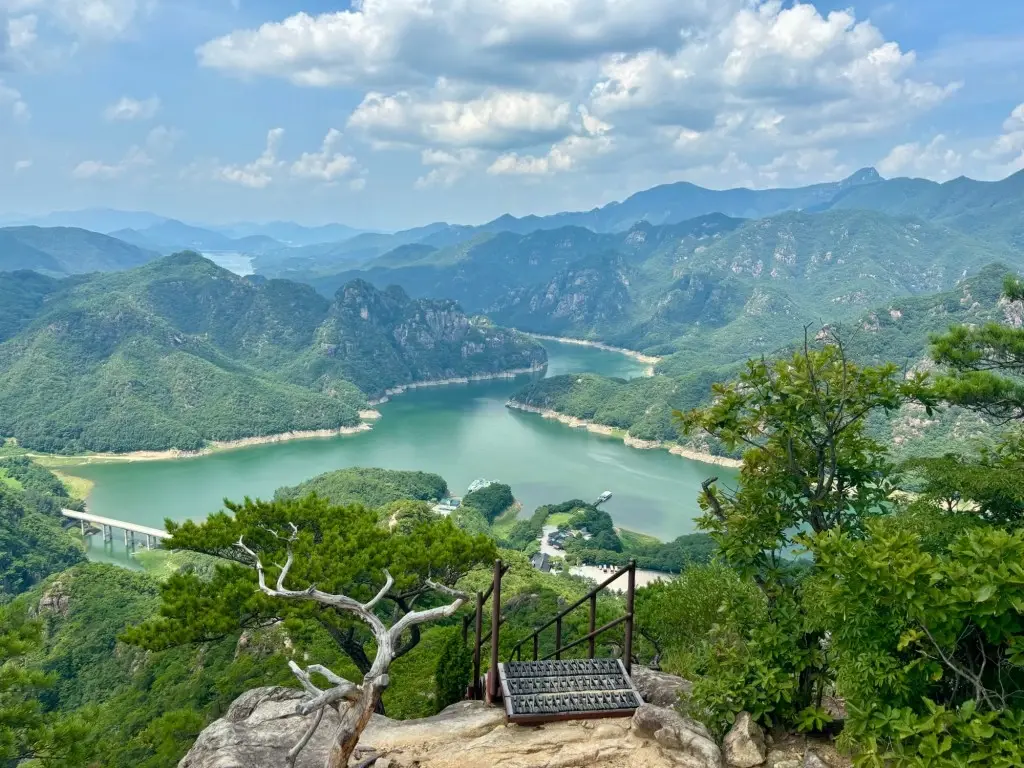
Woraksan's granite peaks rise over Chungju Lake, which formed when Chungju Dam was completed in 1984 at the confluence of the Gwangcheon and the Dal Stream[1].
Human History
In the Silla period the mountain was called Wolhyeongsan and rituals were held there; an old fortress site is still visible on the summit[1]. Remains at its foot include Deokjusanseong fortress, Deokju Temple, Wolgwang Temple and the Woral Palace site[1]. The area has been a passage since the Three Kingdoms period[3].
Park History
Woraksan became a national park on 31 December 1984[2].
Major Trails and Attractions
The valley along the Dal Stream is about 7 km long with eight scenic spots, including Wolgwang Waterfall[1][3]. Deokjusa has a rock-carved Buddha above it, designated a treasure in 1964, and Miruk-ri Temple Site has a stone standing Buddha and five-story pagoda[3]. Boat tours run on Chungju and Cheongpung lakes[3].
Visitor Facilities and Travel
Conservation and Sustainability
Photos
1 photo