Salmon-Challis
United States, Idaho
About Salmon-Challis
Wildlife Ecosystems
The forest takes in most of the Frank Church-River of No Return Wilderness, which gives wildlife large areas of undeveloped habitat[1].
Flora Ecosystems
Vegetation changes with elevation, from valley floors up to the snow-covered high peaks.
Geology
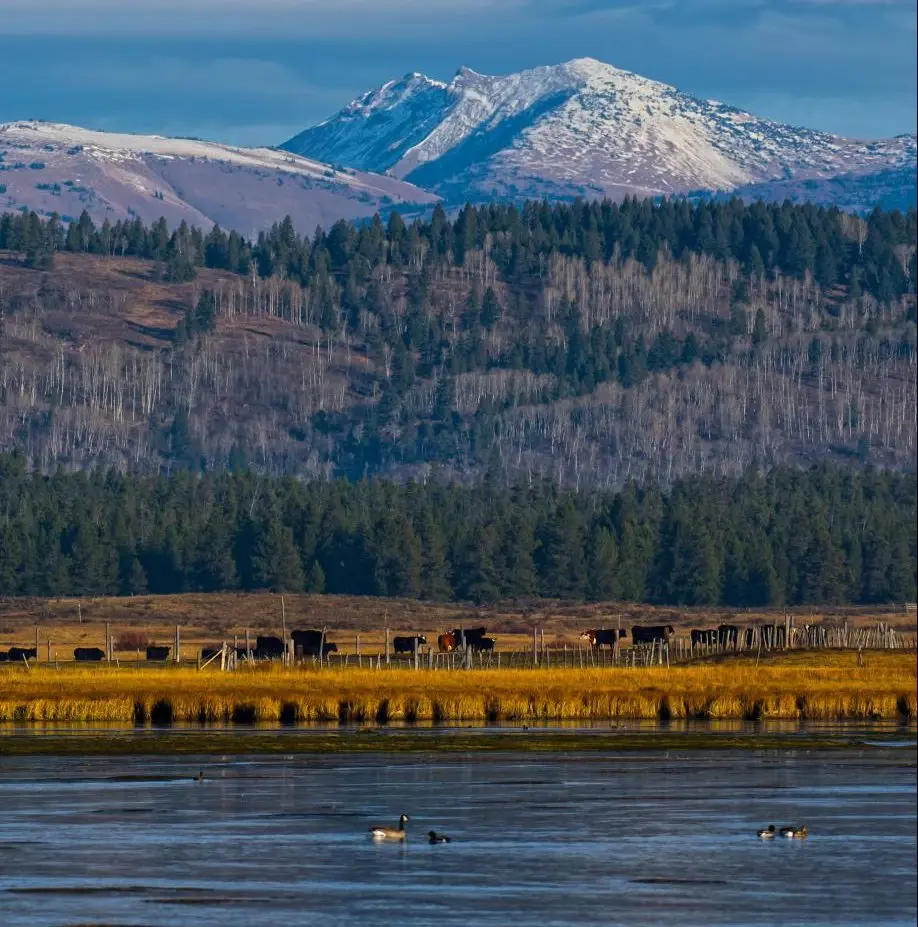
The forest includes landscapes along the Continental Divide and Borah Peak, Idaho's highest point[1].
Climate and Weather
East-central Idaho has a continental climate with cold, snowy winters at elevation and warm, dry summers. Borah Peak stays snow-covered much of the year[1].
Human History
The forest's lands in east-central Idaho include landscapes along the Continental Divide[1].
Park History
The Salmon River Forest Reserve was established in 1906 and renamed the Salmon National Forest in 1908, the year the Challis National Forest was created[1]. In 1980 Congress established the Frank Church-River of No Return Wilderness[1]. The Salmon and Challis forests and part of the wilderness were consolidated in 1996 as a pilot program, formally approved in February 1998[1].
Major Trails and Attractions
Borah Peak is the forest's best-known summit, and the Frank Church-River of No Return Wilderness holds 97 miles of the Salmon River[1]. The Salmon River and Middle Fork of the Salmon River flow freely through the forest[1]. The forest also contains the newly designated Jim McClure-Jerry Peak Wilderness[1].
Visitor Facilities and Travel
Conservation and Sustainability
Photos
No photos available yet