Shivapuri Nagarjun
Nepal, Bagmati
About Shivapuri Nagarjun
Shivapuri Nagarjun National Park is Nepal's ninth national park, on the northern edge of the Kathmandu Valley in the mid-hills. It covers 159 km2 across Kathmandu, Nuwakot, Sindhupalchowk and Dhading districts and is named after Shivapuri Peak, 2,732 m. It is an IUCN category II park managed by the Department of National Parks and Wildlife Conservation[1].
Wildlife Ecosystems
A 2003-2004 survey found 20 mammal species, including Indian leopard, Himalayan black bear, golden jackal, wild boar, Hanuman langur, Chinese pangolin and Royle's pika, and a 2010 camera-trap survey added seven more, among them clouded leopard, leopard cat and masked palm civet. 318 bird species have been recorded, including Eurasian eagle-owl and golden-throated barbet, and a survey in the western part found 11 reptile and amphibian species such as monocled cobra and Himalayan keelback[1].
Flora Ecosystems
Botanists have recorded 2,122 plant species, including 16 endemic ones, and 129 mushroom species. Lower subtropical forest is dominated by Schima and Castanopsis, with chir pine on dry southern ridges and alder, Himalayan cherry and oak along streams; northern slopes carry evergreen oak and laurel forest mixed with rhododendron[1].
Geology
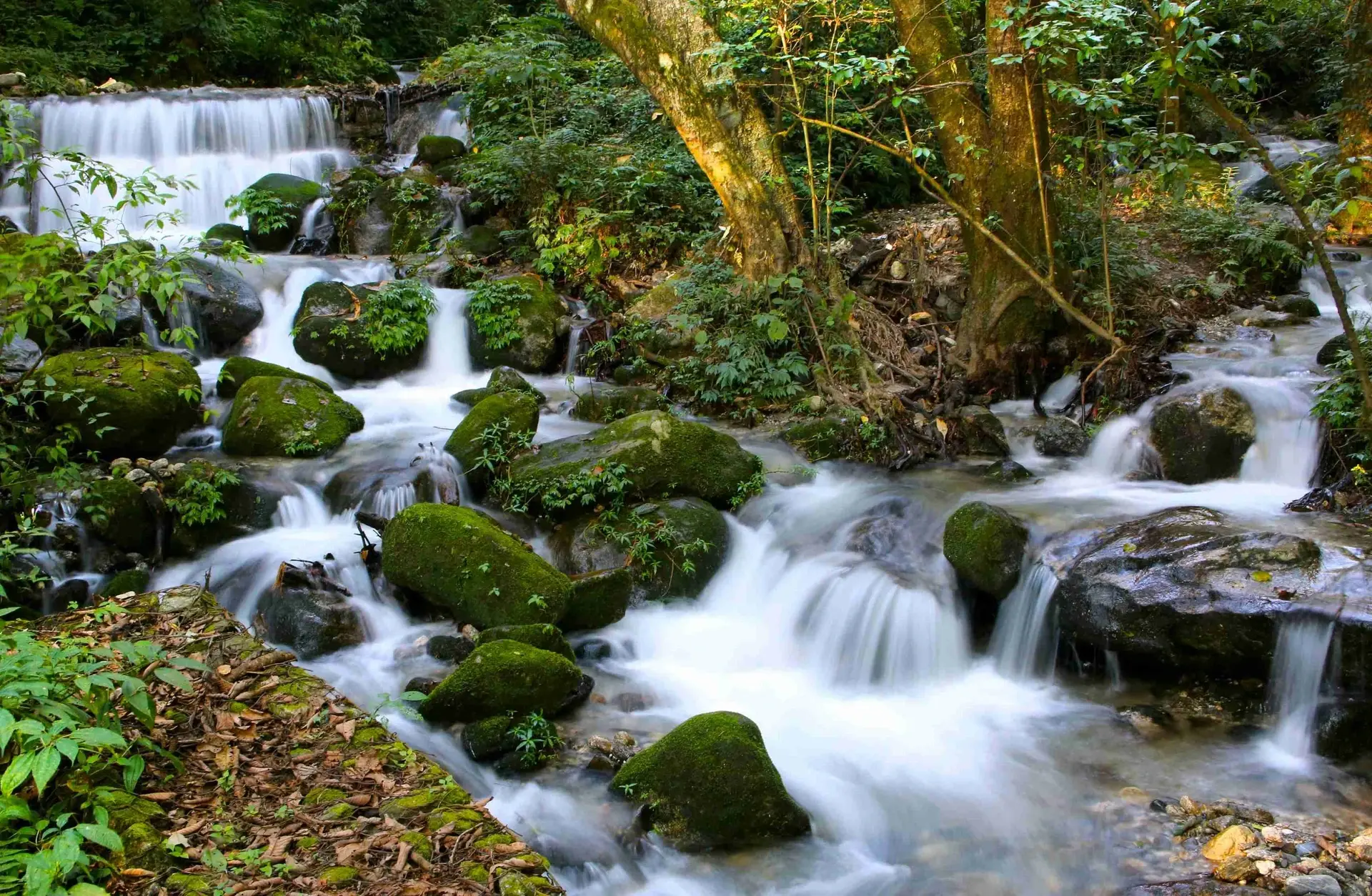
The park is a belt of forested mid-hill ridges rising to Shivapuri Peak above the Kathmandu Valley, and its slopes feed the streams that supply the valley with water[1].
Climate and Weather
The park lies in a transition zone between subtropical and temperate climate. Annual precipitation is about 1,400 mm, roughly 80% of it falling in the monsoon, mostly May to September. Winter temperatures range from 2 to 17 C and summer temperatures from 19 to 30 C[1].
Human History
The hills have long served as the water catchment for the Kathmandu Valley, supplying several hundred thousand cubic metres of water a day. The park contains historical and religious sites, and a popular hiking route is used by locals and visitors alike[1].
Park History
The area was protected as a watershed and wildlife reserve in 1976. In 2002 it was gazetted as Shivapuri National Park with 144 km2, and in 2009 the 15 km2 Nagarjun Forest Reserve was added, giving the present 159 km2[1].
Major Trails and Attractions
The main walk climbs to Shivapuri Peak at 2,732 m. Shorter paths from the Budhanilkantha side lead to Nagi Gompa, a Tibetan Buddhist nunnery, and to Baghdwar, a spring regarded as a source of the Bagmati River.
Visitor Facilities and Travel
The park is about 12 km from Kathmandu, and the usual entrance is the gate just north of Budhanilkantha, reachable by taxi. Entry is through a checkpoint where tickets are sold. The peak is a day hike, and spring and autumn are the clearest seasons.
Conservation and Sustainability
Protecting the watershed that supplies Kathmandu is the park's founding purpose. The park borders 23 village development committees, and the pressure of a nearby capital city on its forests is its main management concern[1].
Photos
1 photo