Mt. Chilbo
North Korea, North Hamgyong
About Mt. Chilbo
Mount Chilbo is a mountain on Korea's northeastern coast, between the East Sea and the Kilju-Myongchon rift valley, with Kyongsong Bay to the north. It was registered as North Korea's fourth international biosphere reserve in 2014, after Paektu, Myohyang and Kuwol[1].
Wildlife Ecosystems
North Korean state media say more than 40 percent of the country's animal and bird species live on Chilbo[1].
Flora Ecosystems
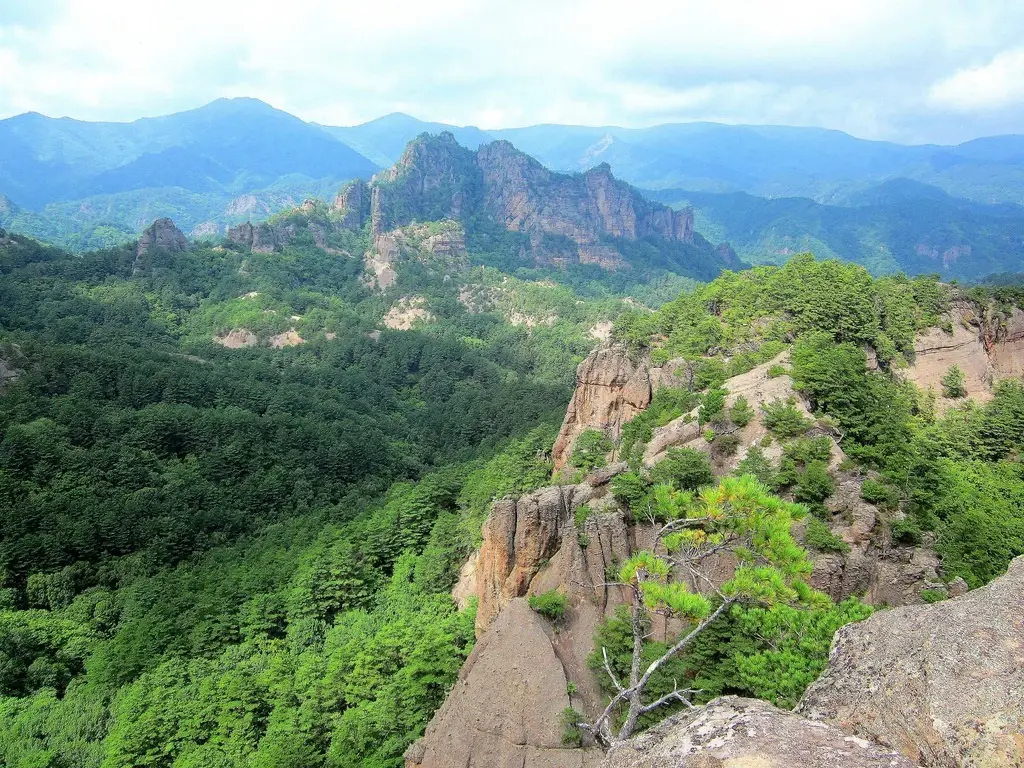
The mountain is covered by dense forests[1]. Inner Chilbo is the mountainous core, Outer Chilbo has forested ridges, and Sea Chilbo is the coastal strip.
Geology
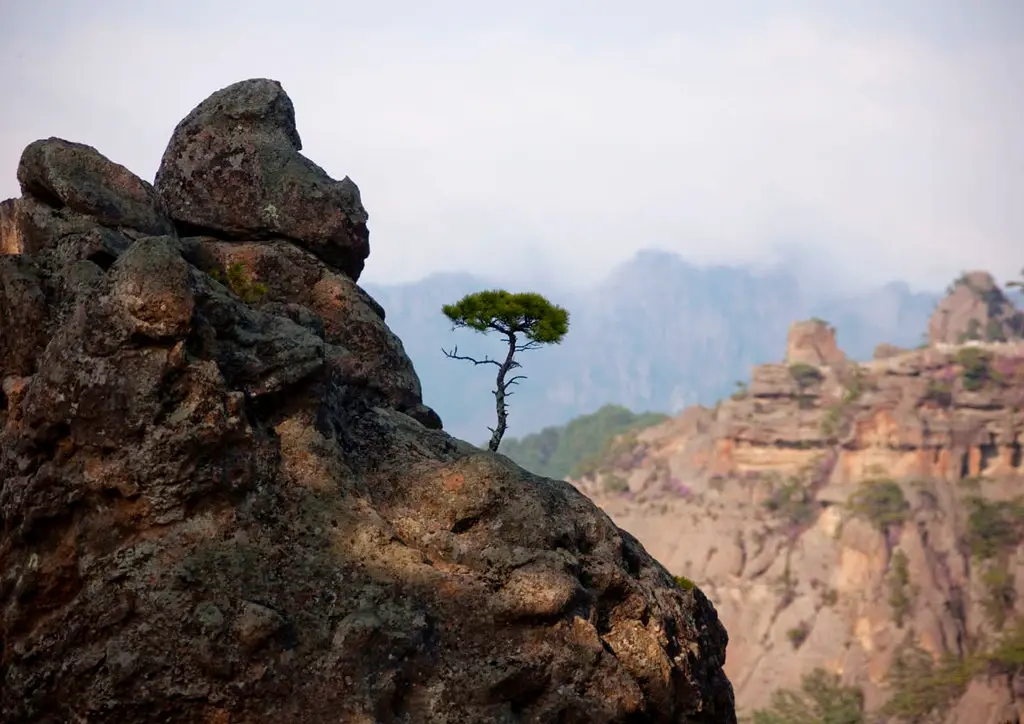
Chilbo is known for unusual rock formations, waterfalls and sea cliffs[1]. Sea Chilbo is a stretch of rocky coast on the East Sea.
Climate and Weather
Chilbo has a cool temperate coastal climate on the northeastern coast, with cold winters and humid summers moderated by the East Sea.
Human History
The mountain holds historical relics as well as state natural monuments, and it is one of Korea's six famous mountains[1].
Park History
UNESCO's Man and Biosphere Programme approved Chilbo's registration at the 26th meeting of its International Coordinating Council in June 2014[1].
Major Trails and Attractions
The mountain is divided into Inner, Outer and Sea Chilbo, and is known for its waterfalls, rock formations, forests and sea views. It is called "Mt. Kumgang in North Hamgyong Province" for its scenery[1].
Visitor Facilities and Travel
The nearest city in the row is Chongjin, about 80 km away. State media describe the area as suitable for ecotourism[1].
Conservation and Sustainability
Chilbo is protected as an international biosphere reserve, and North Korean state media credit national nature conservation policy for protecting its biodiversity[1].
Photos
1 photo