The Dena'ina Athabascan people have inhabited the Susitna Valley for thousands of years, using the area for seasonal hunting, fishing, and plant gathering. The Dena'ina name for Denali, 'Dghelay Ka'a' (the tall one), reflects their long relationship with the mountain. Russian traders and explorers passed through the area in the 18th and 19th centuries. American prospectors and settlers arrived during the late 1800s and early 1900s. The construction of the Alaska Railroad through the area in the 1920s and the Parks Highway in the 1970s brought increasing access and development to the region.
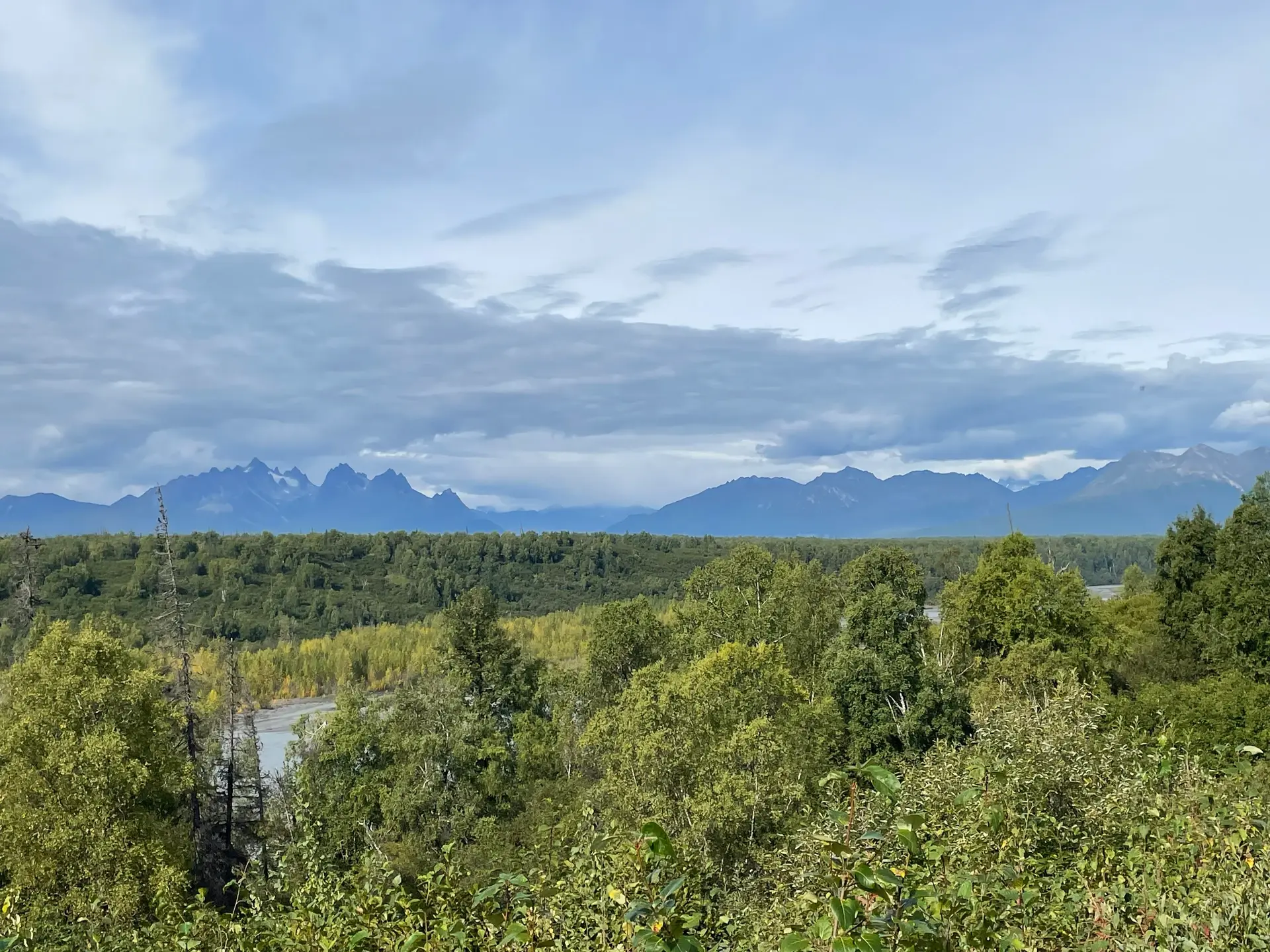 Photo: International Parks
Denali State Park
Alaska, United States
- Rating
- 64
- Established
- 1970
- Area
- 1,316 km²
About Denali
Denali State Park encompasses 325,240 acres of wilderness in the Alaska Range foothills south of Denali National Park and Preserve. Often called the 'little sister' to its more famous neighbor, the state park offers spectacular views of Denali (the mountain) across the Chulitna River valley without the access restrictions and crowds of the national park. Located along the Parks Highway between Anchorage and Fairbanks, the park is far more accessible than its national counterpart and provides outstanding recreational opportunities including hiking, camping, fishing, and winter activities.
Been to Denali? How was it?
Drag to rate. No account needed.
–Move the slider to rate it
Photos
Add your photosPhoto: International ParksBeen to Denali? Add your photos.We'll show them here with your name. No account needed, just photos you took yourself.Share your photos
Park Information
Researched guide
The state park supports many of the same wildlife species found in Denali National Park, including grizzly and black bears, moose, wolves, and caribou. Moose are particularly common in the lowland areas along the Parks Highway corridor. The park's rivers and streams support runs of king, silver, and pink salmon, as well as Arctic grayling, rainbow trout, and Dolly Varden. Golden eagles and other raptors soar along the mountain ridges. Spruce grouse and ptarmigan inhabit the forests and alpine areas respectively. Beavers are active along many of the park's waterways.
The park's vegetation transitions from boreal forest in the lowlands to alpine tundra at higher elevations. White spruce, black spruce, birch, and aspen dominate the forested areas, while willow and alder thickets line rivers and streams. Above treeline, dwarf shrubs, tundra grasses, and mosses create a carpet of green punctuated by wildflowers during summer. Berry bushes including blueberry, cranberry, and crowberry are widespread and provide important food for bears and other wildlife. The Kesugi Ridge area features extensive alpine tundra with panoramic views of the Alaska Range.
The park lies within the Alaska Range foothills, a geologically complex area shaped by the collision of tectonic plates. The rocks are primarily metamorphic and sedimentary, including schist, slate, and greywacke, deformed and uplifted by the same tectonic forces that created Denali itself. Glacial activity during the Pleistocene carved the valleys and deposited the moraines visible throughout the park. The Tokositna and Ruth glaciers originate in the Alaska Range and flow toward the park. Kettle lakes and ponds formed by glacial deposits dot the landscape, particularly in the lowland areas near the highway.
The park experiences a continental subarctic climate with significant variation between valley floors and alpine ridges. Summer temperatures in the lowlands can reach the 70s and occasionally the 80s Fahrenheit, while ridgetop conditions remain much cooler with potential for snow at any time. Winter temperatures routinely drop below zero. Annual precipitation is moderate, averaging about 28 inches in the valleys, with considerably more at higher elevations. The Alaska Range creates its own weather patterns, and conditions on Kesugi Ridge can change from sunny to stormy within hours.
Denali State Park was established in 1970 as part of Alaska's growing state park system. The park was created to preserve the scenic views of Denali and the Alaska Range while providing accessible recreation for Alaskans traveling the Parks Highway corridor. Development has been intentionally limited to maintain the park's wilderness character. The construction of the Veterans Memorial in the park provides a contemplative roadside stop with mountain views. The park continues to serve as an important recreational complement to the more restrictive Denali National Park.
The Kesugi Ridge Trail is the park's premier hiking route, offering a multi-day ridge walk with breathtaking views of Denali and the Alaska Range. The Little Coal Creek trailhead and Byers Lake trailhead provide access to the ridge system. Byers Lake, accessible by car, offers a scenic 4.6-mile loop trail, paddling, and fishing for lake trout and Arctic grayling. The Veterans Memorial along the Parks Highway features an interpretive walk with views of Denali. Winter activities include cross-country skiing, snowmachining, and dog mushing on groomed and ungroomed trails.
The park is located along the Parks Highway (Highway 3) between mileposts 132 and 169, roughly 2.5 hours north of Anchorage and 2.5 hours south of Fairbanks. Byers Lake Campground offers 73 sites with basic facilities. The Alaska Veterans Memorial is located at milepost 147. Several public-use cabins are available for reservation. The Lower Troublesome Creek trailhead and Little Coal Creek trailhead provide primary trail access. No visitor center exists within the park, but the Denali State Park office in Wasilla provides information. The Alaska Railroad passes through the park with a flag-stop near Curry.
Denali State Park plays an important role in maintaining the ecological connectivity between Denali National Park and the broader Alaska Range ecosystem. The park's intact habitats support wildlife corridors used by bears, wolves, and caribou moving between summer and winter ranges. Climate change is affecting the park through increased wildfire frequency, permafrost thaw, and shifting vegetation patterns as shrubs expand into tundra areas. The state park's management balances recreational development with habitat preservation, maintaining large roadless areas while concentrating visitor use along the highway corridor.
Ratings
Compare with other parks ›Denali
Rated higher than 84% of parks on the site · strongest in Access and Safety
How rare and distinctive are the park's natural features compared with parks worldwide?
How dramatic is the landscape's scale and power? Consider sheer cliffs, deep canyons, big waterfalls, glaciers, and volcanoes.
How beautiful are the landscapes, vistas, and natural features?
How impressive and unique are the geological formations and features?
How diverse and unique is the plant life? Consider rare species and distinctive ecosystems.
How abundant and diverse is the wildlife? Consider rare species and unique animal ecosystems.
How peaceful and serene is the environment? Consider noise levels and opportunities for solitude.
How easy is it to get to the park from anywhere in the world, and to get around once you're there?
How safe is the park, region, and journey? Consider dangerous wildlife, plants, weather, crime, and political stability.
How significant are the historical and cultural features?
Location and Map
- Region
- Alaska, United States
- Coordinates
- 62.737° N, 150.108° W (show on the full map)
- Nearest city
- Talkeetna (50 mi)
- Nearest major city
- Anchorage (105 mi)
- N/A
- <30
- 30s
- 40s
- 50s
- 60s
- 70s
- 80+
Park Statistics
- Established
- 1970
- Total area
- 1,316 km²
Visitor Comments