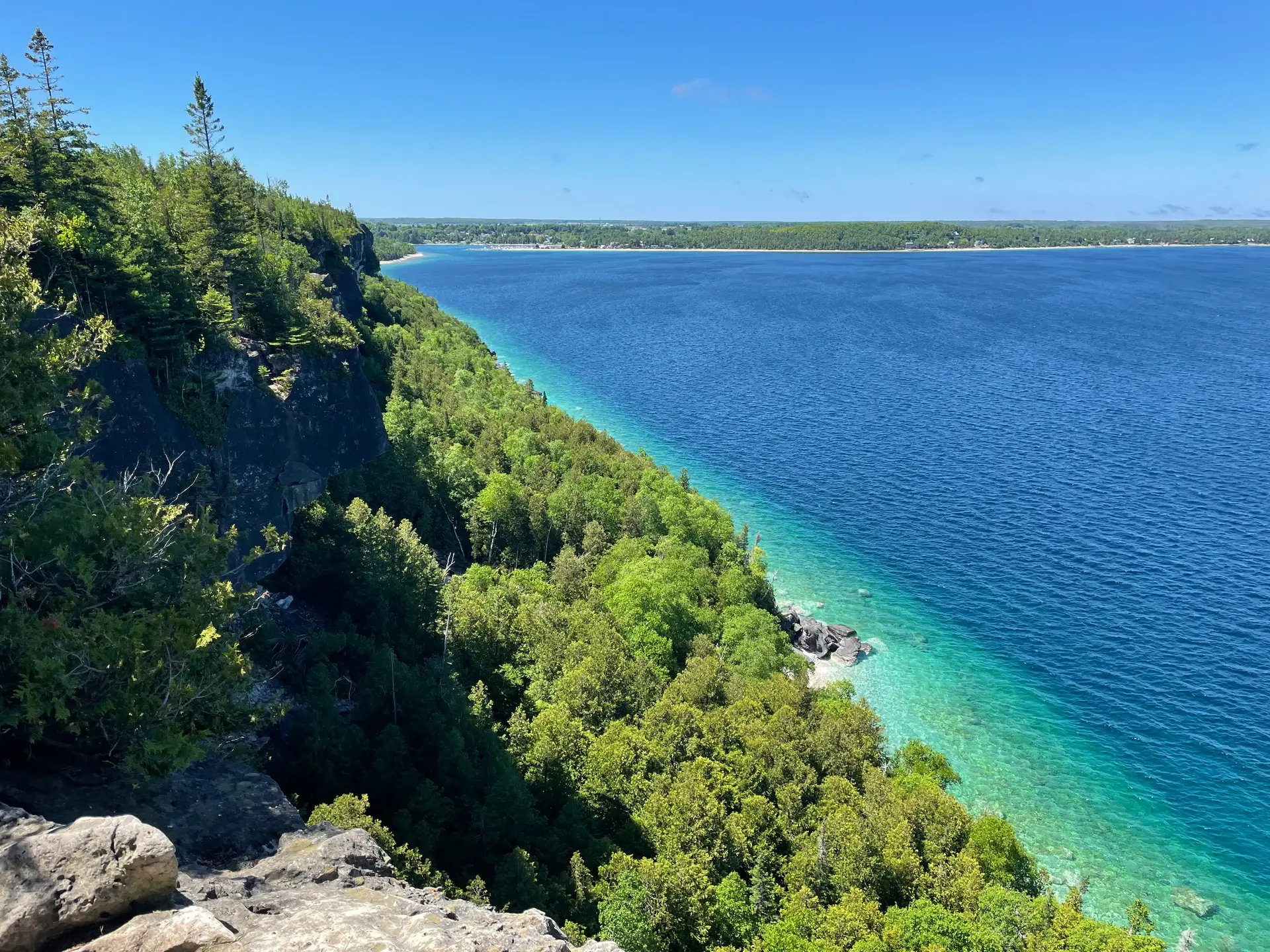
Lion's Head
Canada, Ontario
About Lion's Head
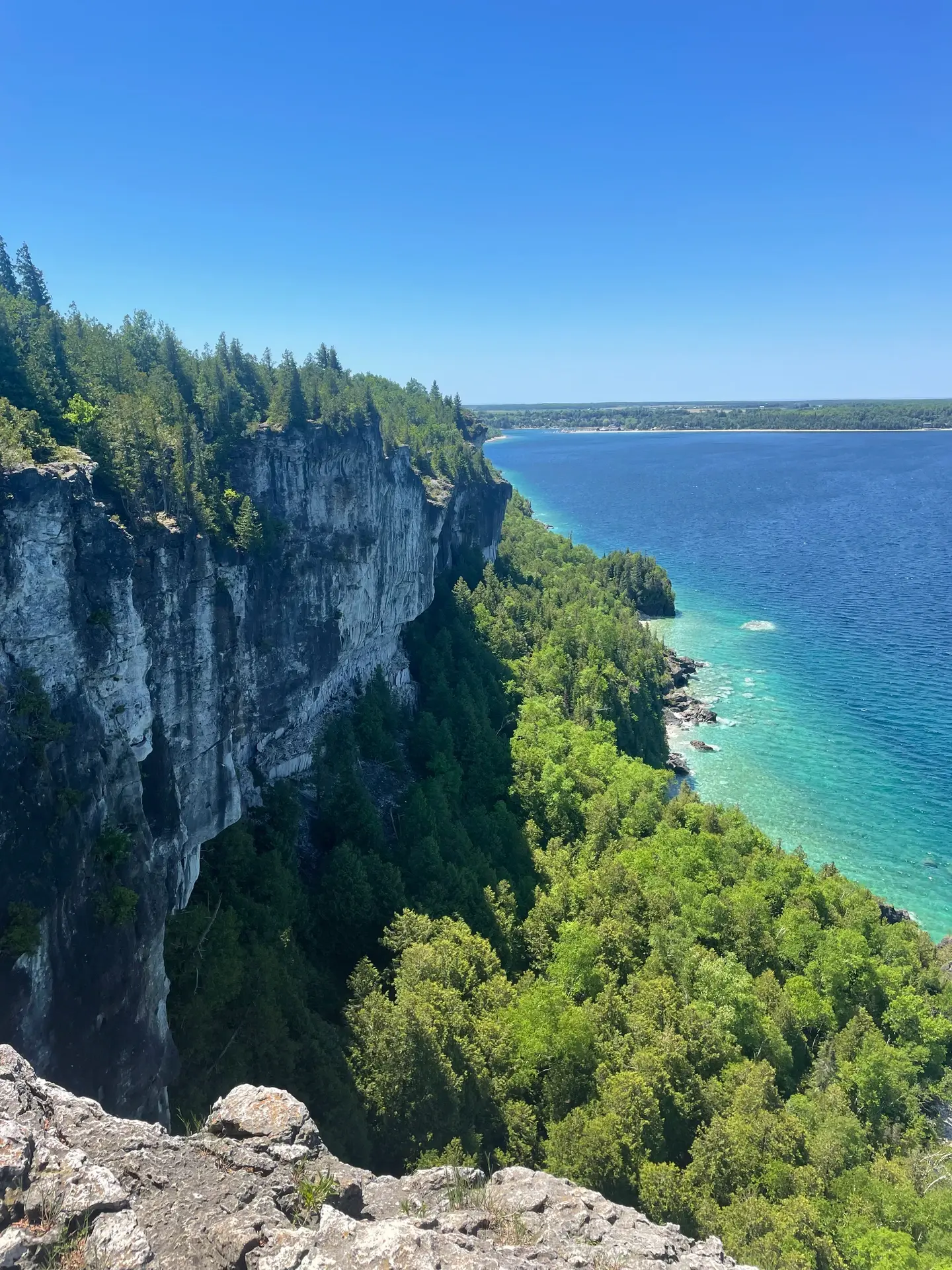
Lion's Head Provincial Park is a 526-hectare nature reserve class park on the Niagara Escarpment of the Bruce Peninsula, about 80 kilometres north of Owen Sound.[1] It lies near the village of Lion's Head in Bruce County, roughly 26 kilometres north of Wiarton.[2] The area is known for a rock formation that, seen from a distance, resembles the profile of a lion.[1] Its purpose is to protect that rock formation and the plants unique to the area, and it is best suited to hiking and nature appreciation.[1] The park is part of the Niagara Escarpment Parks System and the Niagara Escarpment Biosphere Reserve, and the Bruce Trail passes through it.[1] Ontario Parks provides no visitor facilities here.[1]
Wildlife Ecosystems
The Lion's Head site supports a relatively high diversity of breeding forest-interior bird species.[2] The park's 1997 interim management statement records the Caspian Tern, then listed as nationally and provincially vulnerable, and the Black-crowned Night-Heron, then listed as provincially vulnerable, as breeding birds on the site.[2] The cliffs of the Niagara Escarpment, including those at Lion's Head, support one of the most ancient and least disturbed forest ecosystems in North America.[1] Life-science targets for the reserve include a mesic forested talus slope and upland forest within the Georgian Bay shore and escarpment complex.[2]
Flora Ecosystems
The cliffs at Lion's Head are of particular interest for the ancient white cedars that grow along the cliff edge.[1] The site has a relatively large expanse of white cedar cliff ecosystem.[2] The Lion's Head Peninsula area sustains five nationally and provincially rare vascular plants: wall-rue, broad beech fern, hart's-tongue fern, roundleaf ragwort and Rand's goldenrod.[2] The same area holds 18 regionally rare and nine locally significant vascular plant species.[2] The Lion's Head area has been recommended as a provincially significant life science Area of Natural and Scientific Interest.[2] The reserve contains the Lion's Head Peninsula Provincially Significant Life Science ANSI.[3] Ontario Parks notes that the park is known for both nationally and provincially rare plant species and asks visitors to remember that these natural features are easily damaged.[1]
Geology
Some 400 million years old, the Cabot Head, Amabel and Guelph formations of bedrock are exposed in the Lion's Head cliff face.[1] Glacial outwash and eroded potholes lie on top of the escarpment, while mounds of rock debris overgrown with vegetation lie along the bottom.[1] The reserve has provincially significant evidence of catastrophic subglacial meltwater floods, in the form of a great concentration of potholes, an exotic boulder lag and sculpted bedforms including stoss-side furrows, cavetto forms and rock drumlins.[2] It also holds important reference sections of the Cabot Head and Dyer Bay formations of the Silurian sequence of the Niagara Escarpment.[2] Its earth-science targets include Lower to Middle Silurian escarpment and cliff face, and Late Wisconsinan to Holocene potholes, talus slopes and meltwater erosion features.[2] The reserve contains the Lion's Head Provincially Significant Earth Science ANSI and numerous potholes.[3]
Climate and Weather
At Wiarton Airport, the nearest Environment Canada station with 1981 to 2010 climate normals, about 30 kilometres south-southeast of the park, the mean daily temperature is -6.3 °C in January and 18.9 °C in July.[4] The mean daily maximum there is 24.1 °C in July, and the mean daily minimum is -10.1 °C in January.[4] The station records about 1,048 mm of precipitation a year, of which about 751 mm falls as rain.[4] Snowfall averages about 405 cm a year, with December and January each bringing more than 100 cm on average.[4] Rainfall peaks in September and October, at about 103 mm and 97 mm on average.[4] Cross-country skiing is among the recreational activities permitted in the reserve in winter.[2]
Human History
Archaeological evidence dates the earliest human occupation of Lion's Head to nearly 2,500 years ago.[2] The Bruce Peninsula was originally settled by the Odawa, a people of Algonquian background.[2] Samuel de Champlain visited the Bruce Peninsula in 1616.[2] Logging and fishing became the main activities in the area in the late 1800s.[2] The cultural themes the reserve represents are the settlement of the Bruce Peninsula and Georgian Bay lumbering.[2] The 1997 statement noted that both pre-history and historical surveys were still needed to document the cultural values of the reserve.[2] The former Village of Lion's Head is now part of the Municipality of Northern Bruce Peninsula.[3]
Park History
Lion's Head was established as a provincial park in 1985.[1] It is regulated under Ontario Regulation 45/85 as a nature reserve, with 526 hectares, or 1,300 acres, acquired and regulated under the Provincial Parks Act.[2] A further 81 hectares of Crown land in Lots 25 and 26, Concession 9, were identified in 1997 for eventual regulation.[2] An interim management statement approved on July 14, 1997 set direction for the reserve until a full management plan is prepared.[2] The park is classified as a Nature Reserve under the Niagara Escarpment Plan, with Escarpment Natural Area and Escarpment Protection Area land-use designations.[2] The park's mailing address is in care of MacGregor Point Provincial Park near Port Elgin.[1]
Major Trails and Attractions
An Ontario Parks map of the trail system within and next to the park shows the Bruce Trail with side trails including the Pothole, Giant's Cauldron, Dona Baker, McKay's Harbour and Bannister's Hill side trails.[5] The reserve is traversed by the Bruce Trail and used for hiking, cross-country skiing and nature appreciation.[3] In 1997 the only facilities besides a parking lot were the Bruce Trail and a campsite and pit toilet at McKay's Harbour, maintained by the Peninsula Bruce Trail Club.[2] Numerous popular rock-climbing sites are located in the park, although climbing is considered a non-conforming activity in a nature reserve.[2] Visitors can also see the eroded potholes that lie on top of the escarpment.[1]
Visitor Facilities and Travel
There are no visitor facilities in the park.[1] The park is on the Bruce Peninsula, about 80 kilometres north of Owen Sound.[1] The 1997 management statement placed it near the village of Lion's Head in the Township of Eastnor, Bruce County.[2] The 1997 statement described a parking lot at the southern end of the reserve maintained by Ontario Parks.[2] Campfires are not permitted, including at the overnight rest area on the Bruce Trail.[2] Hiking, cross-country skiing and natural heritage appreciation are the permitted recreational activities.[2]
Conservation and Sustainability
The purpose of this nature reserve is to protect the Lion's Head rock formation and the plants unique to the area.[1] Under its management statement, the Bruce Trail may be diverted away from sensitive open cliff-rim vegetation where Ontario Parks deems it necessary.[2] Rock climbing is monitored but not promoted, and extremely sensitive or badly damaged sites may be closed.[2] No agricultural land-use permits are issued within the regulated reserve, and no commercial forestry or trapping is permitted.[2] The statement calls for the impacts of climbing on cliff-edge and cliff-face vegetation to be closely monitored and studied.[2] The park lies within the Niagara Escarpment Biosphere Reserve.[1]
Photos
4 photos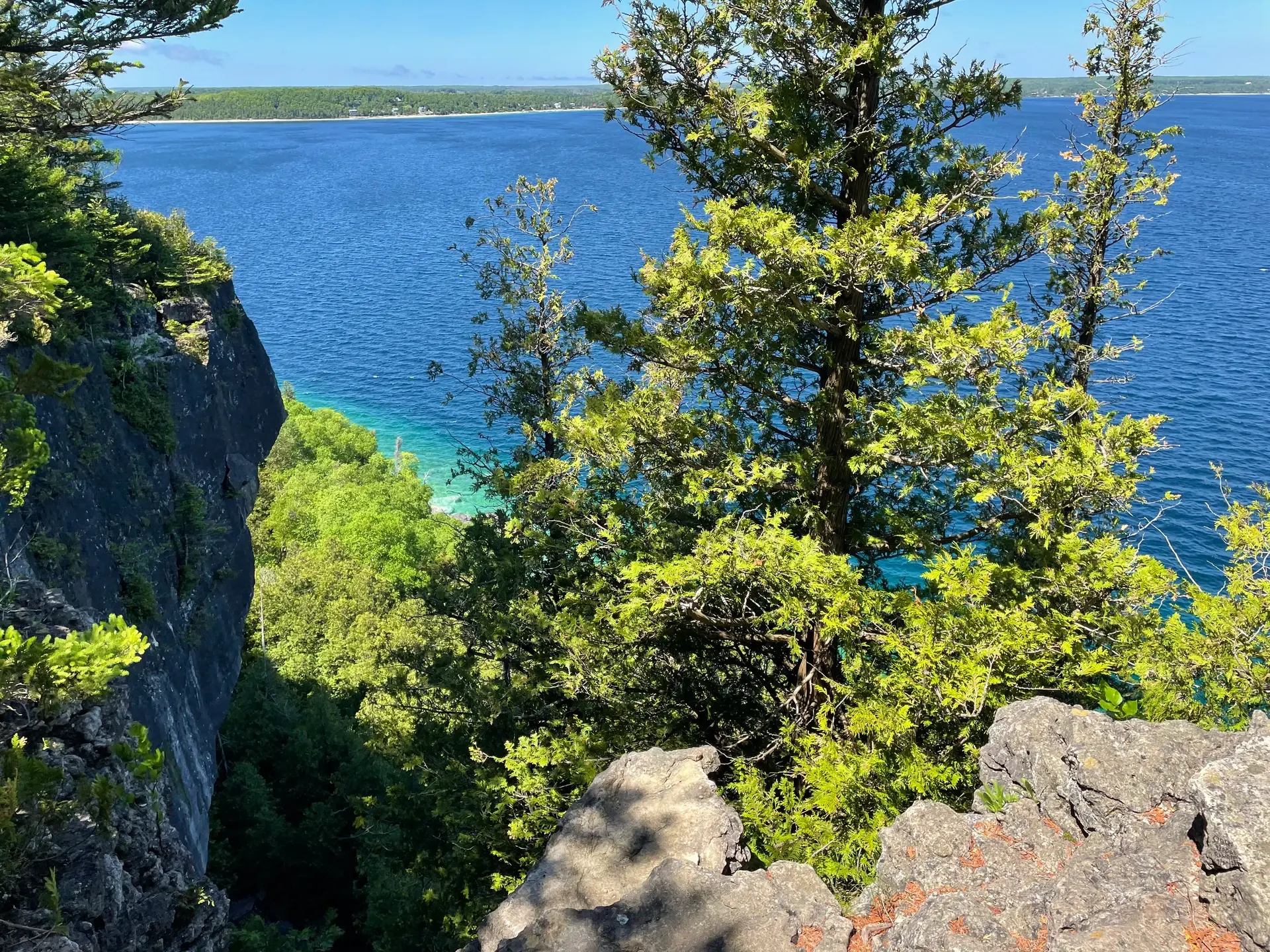
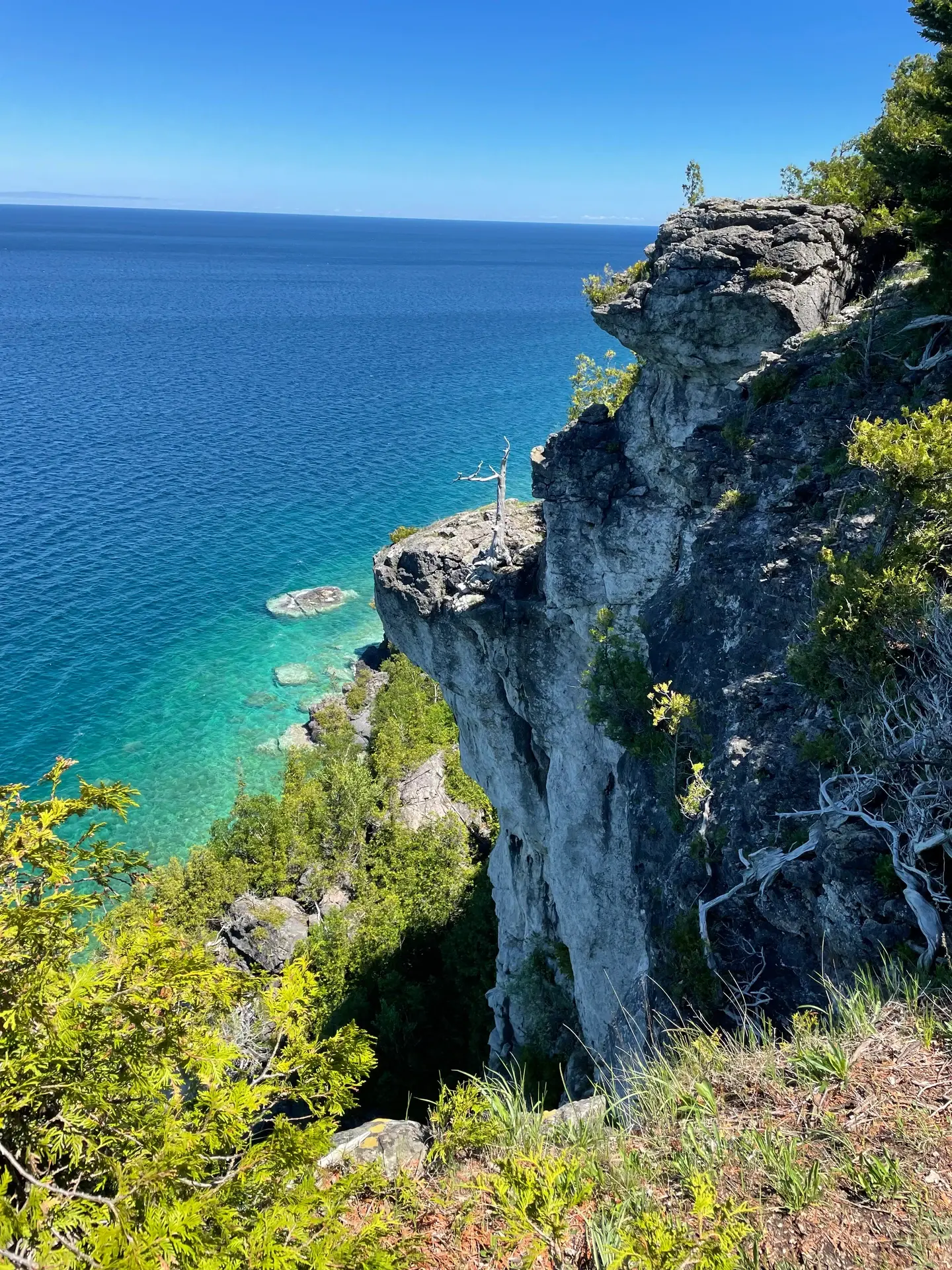
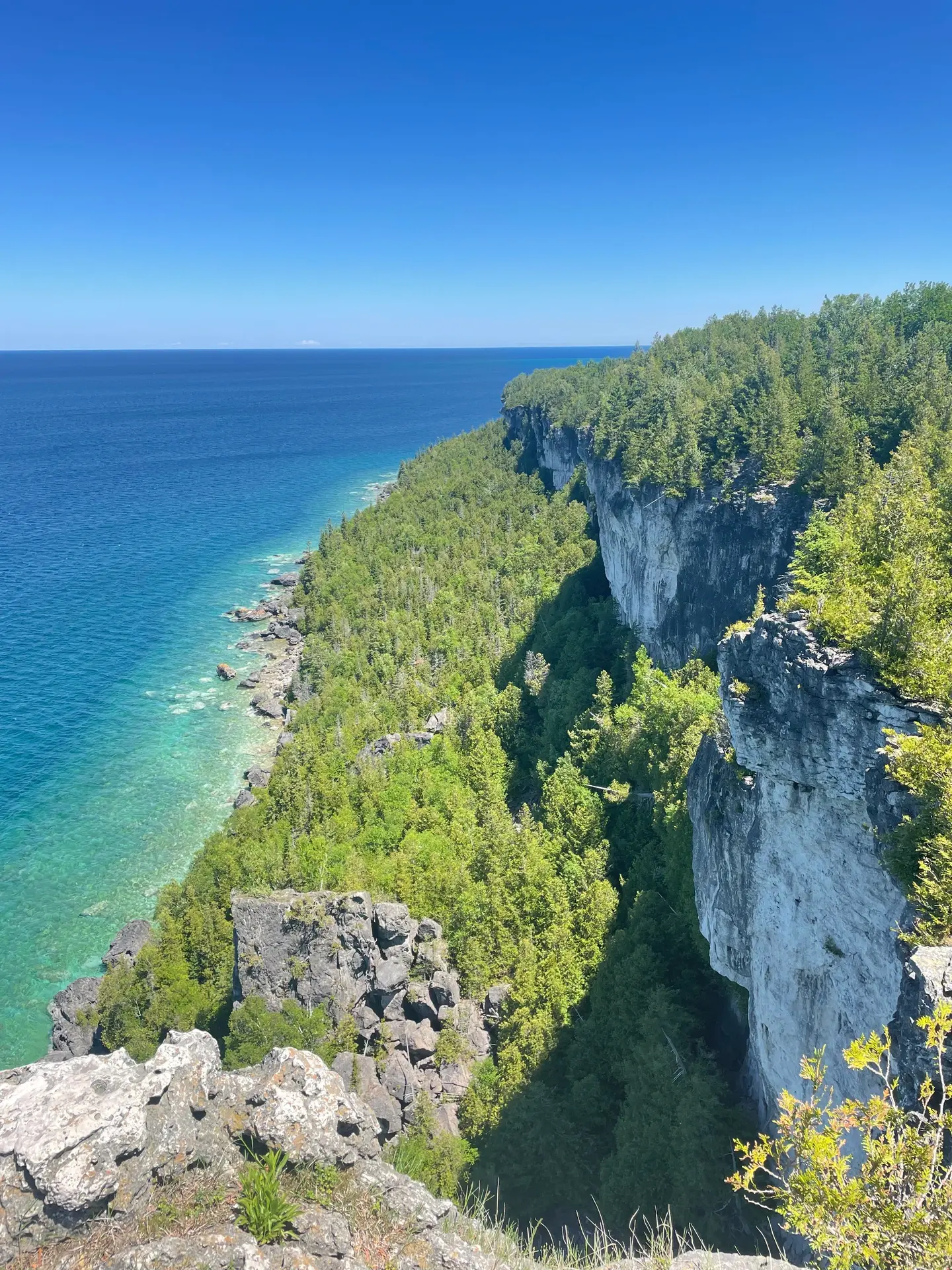
More Parks in Ontario
Sources
- ontarioparks.ca/park/lionshead (opens in a new tab)
- files.ontario.ca/environment-and-energy/parks-and-protected-areas/mnr_bpp0270.p… (opens in a new tab)
- escarpment.org/wp-content/uploads/2024/10/nep-consolidation-oct2024finalclean.p… (opens in a new tab)
- api.weather.gc.ca/collections/climate-normals/items?CLIMATE_IDENTIFIER=6119500&… (opens in a new tab)
- ontarioparks.ca/pdf/maps/lionshead/trail_map.pdf (opens in a new tab)